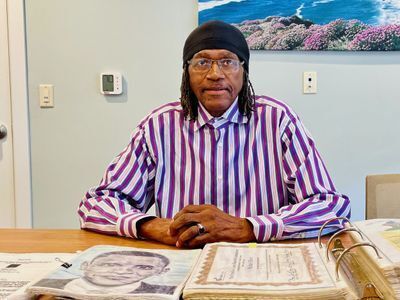
Michael Oliver is a traumatic brain injury (TBI) survivor, a mental health and supportive housing consumer and advocate, and an artist who resides in CHN Housing.
There are two sides to homelessness. I know because I lived—and survived—both. I also know I’m fortunate. I escaped a disheartening cycle that makes it far too easy for people to fall through the cracks.
From the outside, homelessness looks like tents, shelters, borrowed couches, or park benches and bus stops used as beds. From the inside, it is something else entirely. Barriers to housing, mountains of paperwork, and systems that are impossible to navigate without help can cause progress to come to a standstill.
Here’s the reality: if you’re not in the system, you’re not eligible for help. But if you can’t get into the system in the first place, where does that leave you?
For many, it leaves them outside with nowhere to turn. This isn’t a personal failure; it’s a policy failure we can fix.
Ohio and the City of Columbus have recently increased funding to respond to rising homelessness. That is a step in the right direction. But without deeper investment in supportive housing, we risk only managing the crisis instead of solving it.
Supportive housing combines affordable, permanent housing with individualized services like mental health care, addiction treatment, and case management. It meets people where they are, providing a foundation some people need to rebuild their lives. It’s shelter, plus stability, guidance, and advocacy. And it works.
When I moved into supportive housing through Community Housing Network (CHN) in 2021, my life changed. Before that, I was focused on survival: finding food, staying clean, staying safe. After I had a home, I could focus on my future by writing, doing research, honing my skills as a self-taught portrait artist, and reconnecting with my purpose.
Without those supports, too many people remain trapped in crisis or fall back into it.
Homelessness disproportionately affects people with disabilities, like me. After suffering a traumatic brain injury (TBI) in 1988 at age 33, I couldn’t return to my previous work. My life changed overnight. I suddenly was living on a fixed income that no longer supported the cost of housing.
Homelessness is also widely misunderstood. People may think it doesn’t affect them, but it does, economically, socially, and morally. From the inside, people experiencing homelessness want the same things anyone does: stability, safety, and dignity.
Those things are out of reach without affordable and supportive housing. That’s why policy decisions in this area matter so much.
When Columbus City Council more than doubled funding for the local shelter board in May—from $5.2 million to over $13 million—it made a choice that will help address this crisis. But this is just a starting point, not the finish line.
If that funding is reduced or fails to grow with the need, the consequences will be serious. People will lose stability. More individuals will end up on the streets or return to them. In the long run, that approach costs taxpayers more, harms more people, and solves nothing.
Columbus has a better path forward.
We can continue investing in proven solutions, like those offered by CHN, that reduce homelessness, ease pressure on emergency systems, and help people rebuild their lives. This is not just compassionate policy; it is effective and fiscally responsible policy.
Housing is infrastructure. It is health care. It is economic stability.
I’ve spent more than three decades advocating for myself and others, working with community organizations, and sharing my experience. None of that would have been possible without stable housing as my foundation.
So here is my call to action:
- To policymakers: Protect and expand funding for supportive housing. Treat it as essential infrastructure, not optional spending.
- To community leaders and health systems: Partner with housing providers to scale what is already working.
- To Columbus residents: Support organizations like Community Housing Network and recognize that this issue affects the entire community.
To anyone still struggling: keep hope, have courage, and make a change because when stability comes, real progress becomes possible.
And to those who think homelessness doesn’t, or won’t, affect them: it does and it could. One unexpected crisis can change any life.
I’m living proof that supportive housing works.
Now it’s time for Columbus to make sure more people get that same opportunity.